
 Your Local Centre
It’s 3.30pm.
You’ve collected the children from school.
You ask how their day went.
“Fine.”
You ask what they did.
“Nothing.”
Then, five minutes later, they’re arguing about something completely insignificant!
Sound familiar?
For many families, the period between finishing school and bedtime can be one of the busiest parts of the day.
There’s homework to think about, dinner to prepare, activities to attend and the usual challenge of getting everybody organised.
But it’s worth remembering that children have already spent much of their day listening, concentrating, following instructions and interacting with other people.
Just like adults, they may need a little time to unwind.
So how can we help children make the transition from school to home without turning every afternoon into another list of things they have to do?
Here are seven ideas worth trying.
1. Give Them a Little Breathing Space
When children come out of school, our natural instinct is often to start asking questions.
“How was your day?”
“What did you learn?”
“Have you got any homework?”
“Did you remember your PE kit?”
We’re interested, of course.
But some children simply aren’t ready for another conversation.
They might prefer to sit quietly in the car, listen to some music or have a few minutes to themselves.
That’s fine.
You don’t necessarily need to fill the journey home with conversation.
Try allowing a little breathing space before asking about their day.
You may find that they’re more willing to talk once they’ve had time to settle.
2. Make Time for Something Physical
Children spend significant parts of the school day sitting, listening and concentrating.
Afterwards, an opportunity to move can provide a welcome change.
That doesn’t necessarily mean organising another structured activity.
It might be a walk around the park.
Playing with a ball in the garden.
Riding a bicycle.
Dancing to some favourite music.
Or simply spending a little time outdoors.
The important thing is giving children opportunities to use their bodies and enjoy being active.
For families who prefer organised activities, martial arts can provide a combination of physical exercise, learning and social interaction.
The best choice is something your child enjoys and your family can comfortably fit into the week.
3. Don’t Underestimate the Importance of Food and Rest
Sometimes what looks like frustration or irritability may simply be a child who’s tired or hungry.
After a busy day, a snack, a drink and a little rest might be exactly what’s needed.
It doesn’t have to be complicated.
A familiar routine can help.
Come home.
Put your school things away.
Have something to eat.
Take a little time to relax.
Then move on to whatever else the afternoon involves.
It’s easy to overlook these simple things when family life is busy.
But making sure children’s basic needs are met is a sensible place to start.
4. Give Children Some Choice
Much of a child’s school day is organised for them.
They are told when lessons begin, where to sit, what work to complete and when to move on to the next activity.
That’s a necessary part of school life.
But once they get home, it can be helpful to give them some age-appropriate choices.
For example:
“Would you like to read for a little while or play outside?”
“Would you prefer to do your homework before or after your snack?”
“Would you like to help me prepare dinner?”
These aren’t enormous decisions.
But they allow children to practise making choices and taking responsibility.
And that can be an important part of developing independence.
As children become older, they can gradually take responsibility for more things.
Preparing their school bag.
Remembering equipment for activities.
Organising their belongings.
Managing parts of their routine.
The aim isn’t to expect children to do everything for themselves immediately.
It’s to give them opportunities to become a little more capable over time.
5. Make Room for Something They Enjoy
School is important.
Homework is important.
Learning to meet responsibilities is important.
But children also need opportunities to enjoy themselves.
That might mean drawing, reading, building something, playing music, spending time with friends or participating in a hobby.
Enjoyment doesn’t always need to have an educational purpose.
Sometimes it’s enough that a child is happy and engaged in something they like doing.
Having an activity that belongs to them can also give children something positive to look forward to during the week.
For some children, that might be football.
For others, dancing, swimming, music or martial arts.
The activity itself is less important than finding something that suits the individual child.
6. Help Them Recognise Their Own Achievements
When children come home from school, it’s easy for conversations to focus on what still needs doing.
“Have you finished your homework?”
“Have you tidied your room?”
“Have you remembered your reading book?”
Those questions are sometimes necessary.
But it’s also worth making time to notice what children have achieved.
It might be something academic.
Perhaps they’ve learnt a new word or solved a difficult problem.
Or it might be something completely different.
They helped a friend.
They managed something independently.
They persevered with something difficult.
They tried an activity they were nervous about.
These moments deserve recognition.
And praise doesn’t always need to be dramatic.
Sometimes a simple:
“You must be pleased with yourself. You worked hard at that.”
can encourage children to recognise their own progress.
This is something we value in martial arts too.
Students don’t improve everything in one lesson.
They make small improvements through regular practice.
Learning to notice those improvements can make the experience more rewarding.
7. Protect Some Family Time
Between school, work, activities and household responsibilities, family life can sometimes feel like a series of appointments.
It’s easy to spend the evening getting everybody organised without actually spending much relaxed time together.
But meaningful family time doesn’t have to involve elaborate outings or expensive activities.
It might be sitting down for dinner.
Playing a game.
Walking the dog.
Reading together.
Or simply chatting while preparing a meal.
For some families, shared activities can provide another opportunity to connect.
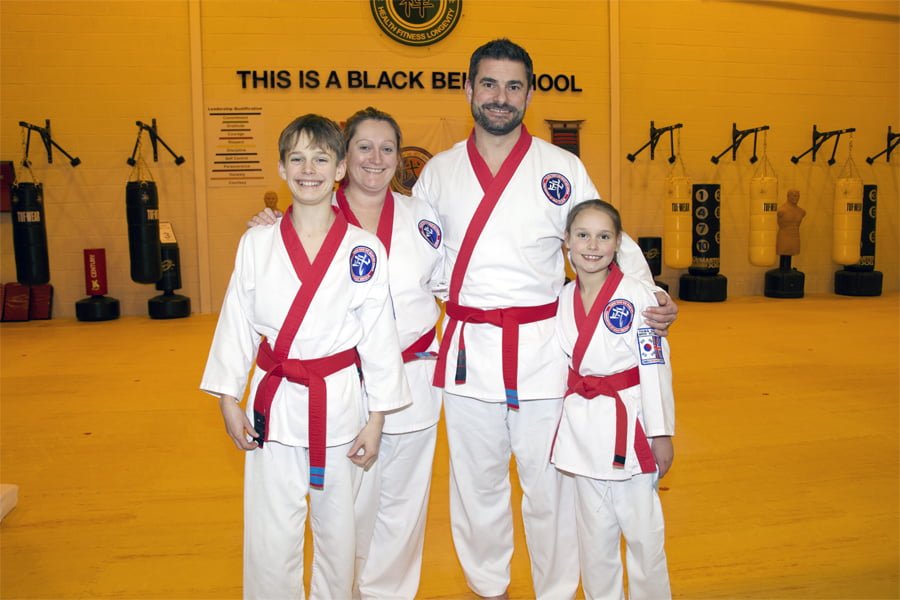
One of the things we particularly enjoy about family martial arts is the opportunity for parents and children to become students together.
Imagine your child seeing you learn a new technique.
Perhaps you get it wrong.
You laugh about it.
You try again.
And eventually, you both improve.
That can be a lovely shared experience.
It also gives children an opportunity to see that adults are still learning too.
Finding a Balance That Works for Your Family
There’s no single perfect after-school routine.
Every family is different.
Some children enjoy having plenty of activities.
Others need more quiet time.
Some settle quickly after school.
Others need a little longer to unwind.
And what works brilliantly one week may need adjusting the next.
The important thing is finding a balance between responsibilities, relaxation, physical activity and spending time together.
Children need opportunities to learn.
They need opportunities to rest.
And they need opportunities to discover what they enjoy.
Getting that balance right doesn’t mean organising every minute of their day.
Sometimes it simply means making room for the things that help them feel happy, capable and connected.
Could Martial Arts Be Part of Your Family’s Week?
At Family Martial Arts Centres, we believe martial arts can be a positive addition to family life.
Our classes offer opportunities for children to learn physical skills while practising concentration, self-control, respect and perseverance.
And with family classes available, parents can enjoy learning alongside their children too.
You don’t need any previous martial arts experience.
You don’t have to be particularly fit or flexible.
You simply need to be willing to try something new.
🥋 Come and Experience a Class
Your first trial lesson at Family Martial Arts Centres is completely FREE.
Come along, meet us and see whether martial arts is something you and your family might enjoy.
If you decide to enrol afterwards, you’ll also receive a FREE martial arts uniform.
Contact Family Martial Arts Centres to arrange your completely free beginner trial lesson.
We’d love to welcome you.